
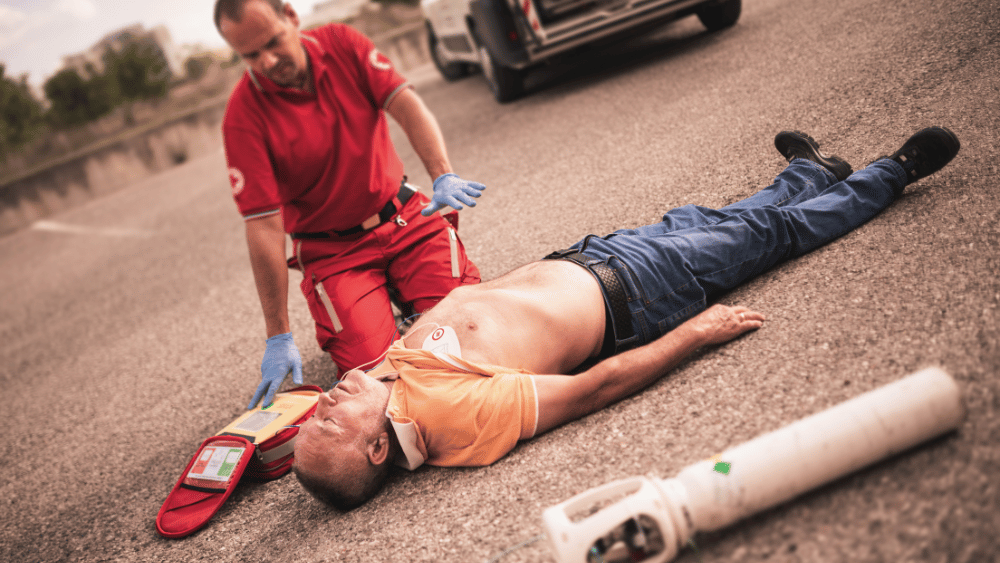
When someone collapses from sudden cardiac arrest, the moments that follow are critical. Cardiopulmonary Resuscitation, or CPR, is a life-saving technique designed to bridge the gap between a medical emergency and the arrival of professional help. It is a powerful intervention that can be performed by almost anyone, anywhere. By providing immediate support to the body’s most vital functions, CPR significantly increases a person’s chance of survival.
This essential procedure keeps oxygenated blood flowing to the brain and other organs, preventing irreversible damage. Understanding how CPR works, when to perform it, and why it is so important can empower you to act confidently in a crisis. This guide will explain the mechanism behind CPR and its crucial role in saving lives.
What does CPR stand for?
CPR stands for Cardiopulmonary Resuscitation. The name itself breaks down its function. “Cardio” refers to the heart, “pulmonary” refers to the lungs, and “resuscitation” means to revive. At its core, CPR consists of two main components: chest compressions and rescue breaths.
Chest compressions manually pump the heart, forcing blood to circulate throughout the body. Rescue breaths provide oxygen to the lungs, which is then carried by the blood to vital organs. The ultimate goal of CPR is to maintain circulation and oxygenation during cardiac arrest, effectively buying precious time until advanced medical care can restore a normal heart rhythm.
When to perform CPR?
CPR should be performed when someone is unresponsive and not breathing normally. It is a critical intervention in emergencies like sudden cardiac arrest, drowning, electrocution, or choking that has led to unconsciousness. Before starting CPR, it is essential to assess the situation quickly.
First, check if the person responds to a tap on the shoulder or a loud question. If there is no response, check their breathing. Look for the rise and fall of the chest or listen for breath sounds. Gasps or irregular breathing are not normal. If the person is unresponsive and not breathing normally, you should assume it is a cardiac arrest. The most critical next step is to call 911 or your local emergency services immediately, or tell someone else to do so, before beginning CPR.
How does CPR work?
CPR works by manually taking over the functions of the heart and lungs after they have stopped working. The process is straightforward and can be broken down into a few key steps with significant physiological effects.
Steps to Perform CPR:
- Check for Responsiveness: Tap the person’s shoulder and shout, “Are you okay?” to see if they respond. Simultaneously, check for normal breathing for 5-10 seconds.
- Call for Help: If there is no response and no normal breathing, call 911 immediately or direct someone else to do it. If an Automated External Defibrillator (AED) is available, have someone retrieve it.
- Start Chest Compressions: Place the heel of one hand in the center of the person’s chest, with your other hand on top. Push hard and fast at a rate of 100-120 compressions per minute, with a depth of about 2 inches for an adult.
- Provide Rescue Breaths: If you are trained in CPR, give 2 rescue breaths after every 30 compressions. Tilt the head back, lift the chin, pinch the nose, and give two breaths, each lasting about one second, watching for the chest to rise.
Physiological Effects:
Chest compressions artificially pump the heart. Each compression squeezes the heart between the sternum and the spine, forcing blood out of its chambers and into the arteries. This action maintains blood flow to the brain and other organs, preventing cell death due to a lack of oxygen. Rescue breaths deliver oxygen into the lungs, where the circulating blood can pick it up. The rhythm and depth are crucial; consistent, deep compressions ensure that enough blood pressure is generated to perfuse the brain.
What to do after performing CPR?
After you have started CPR, your role is to continue your efforts until professional help takes over or the situation changes. Do not stop CPR unless the person shows obvious signs of recovery, such as waking up or breathing normally on their own.
Continue the cycle of 30 compressions and 2 breaths. If an AED arrives, use it as soon as possible and follow its voice prompts. Once emergency responders arrive, they will take over care. Please provide them with a summary of what happened and how long you have been performing CPR. If the person begins to breathe normally before help arrives, stop compressions and place them in the recovery position (on their side) while you continue to monitor their breathing. Stay with them and offer reassurance until medical professionals are on the scene.
When is CPR unsafe or ineffective?
While CPR is a life-saving tool, there are specific situations where it may not be appropriate or effective. It is unsafe to perform CPR if the scene is dangerous to you, such as in a fire or on a busy highway. Your safety as a rescuer comes first.
CPR may be ineffective or should not be performed if the person has obvious signs of irreversible death, such as rigor mortis, or has sustained injuries incompatible with life (e.g., decapitation). Additionally, you should not perform CPR if the person has a valid “Do Not Resuscitate” (DNR) order. In some cases of severe trauma where there is massive blood loss, chest compressions alone may be ineffective without simultaneous bleeding control. It’s also important to recognize that CPR’s success rate is not 100%, but it provides the best possible chance of survival in a cardiac arrest.
What are the risks of performing CPR?
Performing CPR is a physical act and carries some potential risks for the person receiving it, but these are minor compared to the certainty of death without intervention. The most common complication is rib fractures, which can occur from the force required for effective chest compressions. Other potential injuries include bruising or damage to internal organs like the lungs or liver.
It is crucial to remember that these risks are acceptable in a life-or-death situation. A broken rib can heal, but a brain deprived of oxygen for several minutes cannot. Proper training helps minimize the risk of complications by teaching the correct hand placement, depth, and rate for compressions. Ultimately, the benefit of attempting to save a life far outweighs the potential for injury.