
More than 25% of emergency room visits could be avoided with basic first aid and self-care, underscoring the critical need for widespread first-aid knowledge. It is a life-saving skill set that equips individuals to respond effectively to injuries and medical emergencies, providing crucial care until professional help arrives.
In this blog, we discuss first aid training in more detail, answering common questions and doubts most enrollees have, from the duration of courses to the topics covered.
Duration of First Aid Certification Courses
A first aid class teaches people how to handle common injuries and medical emergencies effectively. The duration of these courses can vary depending on the level of training and the specific skills being taught. Here’s what it involves:
1. Basic First Aid Courses
Introductory first aid courses are designed for anyone who wants to learn essential skills for common emergencies, such as treating minor cuts, burns, and sprains. They teach how to assess a scene, control bleeding, and respond to choking. These introductory classes usually last 2 to 4 hours. They’re a great starting point for parents, teachers, and anyone wanting foundational knowledge to help in an emergency without needing comprehensive certification.
2. Comprehensive Certification Courses
Comprehensive certification courses offer more detailed training by combining first aid with CPR (Cardiopulmonary Resuscitation) and AED (Automated External Defibrillator) use. These courses are for individuals who need official certification for their job or want to be fully prepared for a cardiac emergency. They typically last 4 to 8 hours to cover all topics thoroughly. This certification ensures that participants can confidently handle a wide range of emergencies.
3. Advanced First Aid Courses
Advanced first aid courses are for professionals such as first responders, wilderness guides, and industrial safety officers who may face more complex medical situations. These classes are longer, usually taking 8 to 16 hours to complete. They teach advanced skills such as managing severe trauma, dealing with environmental emergencies like hypothermia, and handling complex wound care. These courses provide in-depth knowledge for those who are often the first on the scene in remote or high-risk settings.
4. Workplace-Specific First Aid Courses
Workplace-specific first aid courses are tailored to meet the unique safety requirements of industries such as construction, manufacturing, and childcare. These programs often adhere to OSHA standards and address industry-specific risks, such as chemical exposure and machinery-related injuries. Because they address specialized topics and often include extensive hands-on scenarios, these courses are the most intensive, typically taking 16 to 20 hours to complete.

Factors Influencing Course Duration
In most cases, a standard first aid and CPR class takes about four to five hours. But when you ask, “How long does first aid certification take?”, the answer can change based on the type of certification, the curriculum, and the instructor’s pace. Let’s take a look at what can make first aid classes shorter or longer:
1. Curriculum Complexity
The complexity of what’s being taught significantly affects how long a first aid class lasts. Introductory courses covering just the essentials of bleeding control and wound care tend to be shorter. However, if the class includes more advanced topics, such as CPR for all ages, AED use, or managing spinal injuries, it will naturally take longer. Think of it this way: the more skills you need to learn to handle a broader range of emergencies, the more time it will take to teach and practice them effectively.
2. Class Format
The format of a first aid class—whether in-person, online, or blended— affects its duration. In-person classes often run 4–8 hours, as they include instructor-led lectures, hands-on practice, and real-time skill assessments. Self-paced online courses can be completed in 1–3 hours but lack the crucial hands-on component. Blended courses offer a compromise, combining 1–2 hours of online theory with a 2–3 hour in-person skills session. Over 70% of learners report that blended formats provide a good balance of convenience and practical experience.
3. Skill Level of Participants
Participants’ existing skill level influences the length of a first aid class because people absorb information at different rates. A class composed entirely of beginners may require more time for the instructor to explain fundamental concepts and demonstrate techniques thoroughly. In contrast, a recertification class for experienced individuals will move much faster, focusing on updates and skill refreshment rather than foundational learning. A mixed-level class often takes longer as the instructor balances the needs of both new and returning students.
4. Class Size
The number of people in a first-aid class can affect how long it takes. In a smaller class, each participant receives more direct interaction and personalized feedback from the instructor, which can accelerate learning. With a larger group, more time is needed to ensure everyone has a chance to practice skills like bandaging or applying splints. Imagine practicing on a manikin; in a large class, you might have to wait your turn, which would extend the overall duration.
5. Demonstration and Practice Time
First aid isn’t something you can learn just by reading a book; you need to get hands-on. Instructors spend a significant portion of the class demonstrating skills such as using an EpiPen, controlling severe bleeding, or performing CPR. After the demonstration, it’s your turn to practice. This hands-on time is essential for building muscle memory and confidence. The duration can extend based on the number of skills covered and how many repetitions are needed for everyone to feel competent and ready.
What Does First Aid Training Cover in Those Hours?
First aid training covers a wide range of topics to prepare individuals to respond effectively in various emergencies. Here’s what you can expect to learn during a first aid certification course:
- Basic First Aid Skills: You’ll learn how to handle common injuries like cuts, scrapes, burns, insect bites, and nosebleeds. This includes wound care, bandaging techniques, and recognizing the signs of minor vs. severe injuries.
- CPR and AED Training: Most comprehensive courses include training on how to perform CPR for adults, children, and infants. You will also learn how to use an Automated External Defibrillator (AED), a device that can restore a normal heart rhythm during sudden cardiac arrest.
- Emergency Response: This module covers responding to more serious medical emergencies, such as heart attacks, strokes, seizures, and diabetic emergencies. You’ll also learn how to handle fractures, sprains, and potential head, neck, or back injuries.
- Specialized Training: Some courses offer specialized modules focused on specific populations or environments. This can include pediatric first aid for childcare providers or wilderness first aid for outdoor enthusiasts, covering topics like hypothermia and snake bites.
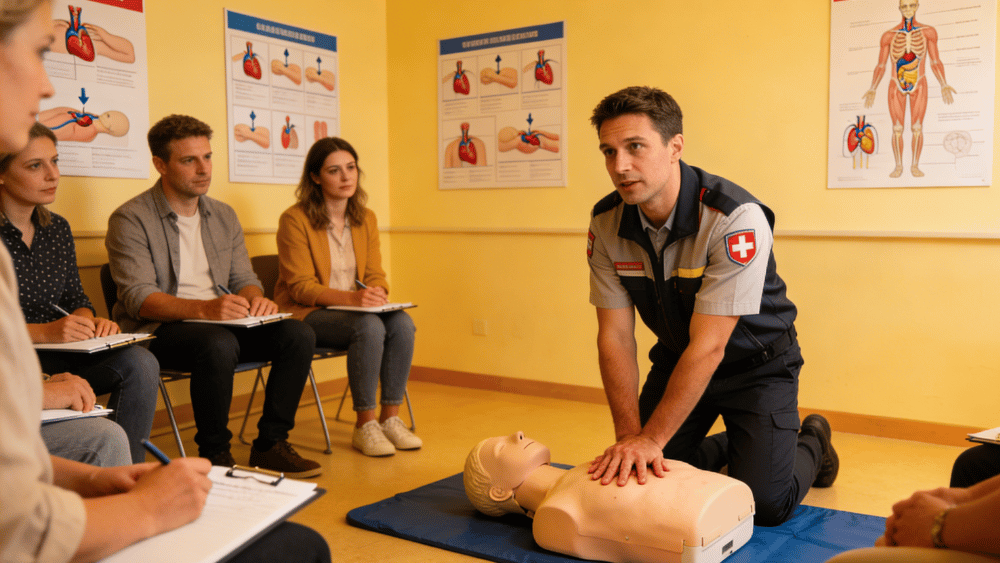
- Hands-On Practice: A crucial component of any first aid course is hands-on practice. You will use manikins to practice CPR and choking relief techniques. You will practice bandaging and splinting on classmates to build confidence in your ability to perform these life-saving procedures under pressure.
Do Online First Aid Courses Take as Long as In-Person Ones?
The first question busy professionals ask is—how much time does it take to complete first aid training? The answer really depends on whether you choose a fully online, entirely in-person, or blended learning format.
- Online Courses: These offer the most flexibility, allowing you to learn at your own pace. On average, the theoretical portion of an online first aid course can be completed in one to two hours. However, for a valid certification, most organizations require an in-person skills assessment.
- In-Person Courses: In-person training follows a fixed schedule, typically spanning 3 to 8 hours in a single day. This format is valuable for its hands-on nature, allowing for direct instructor feedback and interactive practice scenarios.
- Blended Courses: Combining the best of both worlds, blended learning involves completing the theoretical part online (1–2 hours) and then attending a shorter in-person session (2–3 hours) for hands-on practice and skills testing. This is often the most efficient option for those needing full certification.
Breakdown by Course Type
Whether you’re a new parent looking for basic skills or a workplace safety officer needing advanced training, each course comes with its own timeline. To help you decide quickly, here’s a snapshot of how the primary first aid classes stack up.
- Basic First Aid: Takes 2–4 hours. Suitable for parents, teachers, and community volunteers who want to learn how to handle common injuries such as cuts, burns, and sprains.
- Comprehensive First Aid/CPR/AED: Takes 4–8 hours. Ideal for workplace responders, fitness trainers, and anyone wanting a full certification covering both medical emergencies and cardiac arrest.
- Advanced First Aid: Takes 8–16 hours. Designed for first responders, wilderness guides, and professionals in high-risk environments who need to manage severe trauma and environmental emergencies.
- Workplace-Specific First Aid: Takes 16–20+ hours. Tailored for specific industries like construction or childcare, covering OSHA requirements and job-specific hazards.
Who Needs First Aid Certification?
First aid is a fundamental life-saving skill for responding to injuries from falls, cuts, or medical emergencies such as seizures or allergic reactions. Acting quickly with first aid can prevent an injury from worsening and can sustain life until medical professionals arrive.
Anyone can and should learn first aid, though official certification is often a job requirement for certain professions, including:
- Healthcare workers
- Teachers and childcare providers
- Fitness trainers and coaches
- Lifeguards and first responders
- Construction workers and electricians
- Flight attendants
- Volunteers and community leaders
Additionally, parents, babysitters, and anyone who cares for others will find immense value and peace of mind in being certified.
How Much Does a First Aid Certification Course Cost?
The cost of a first aid certification course in the U.S. usually ranges from $40 to $120, depending on the course level, format, and certifying organization.
- Basic First Aid courses for the general public typically cost around $40 to $70.
- Comprehensive First Aid/CPR/AED courses generally range from $70 to $120, with higher fees if they include hands-on skills testing for full certification.
- Advanced courses like Wilderness First Aid or advanced workplace safety training can cost $150 or more due to the extended training time and specialized materials.
Always check what’s included in the price before you sign up. Some providers may charge extra for printed manuals or official certification cards.
Ready to Save a Life? Take the First Step with First Aid Training
Knowing how long a first aid class takes is essential for planning, but what truly matters is the confidence it gives you to act in an emergency. First aid training equips ordinary people with the skills to respond effectively when injuries happen. By investing just a few hours in learning first aid, you can become a crucial link in the chain of survival, potentially saving the life of a loved one, a colleague, or a stranger. So, take the time to learn first aid—it’s a small commitment with a powerful impact.
Frequently Asked Questions (FAQs)
1. How long does an introductory first aid course take?
An introductory first aid course typically takes between 2 to 4 hours to complete. This covers essential skills for common injuries.
2. Can I get first aid certified online?
You can complete the learning portion online, which usually takes 1-2 hours. However, to receive a valid, nationally recognized certification, you almost always need to complete an in-person, hands-on skills session.
3. How long is first aid certification valid?
Most first aid certifications are valid for 2 years. After that, you will need to take a renewal or recertification course to keep your skills up to date.
4. Is first aid training difficult?
No, first aid training is designed to be accessible for everyone, regardless of their background. Instructors use clear, straightforward language and plenty of hands-on practice to ensure you feel confident.
5. How much does first aid certification cost?
Costs vary, but you can expect to pay between $40 and $120 for a standard First Aid/CPR/AED certification course.